In the world of apparel and home textiles, elasticity has become a key feature for comfort and performance. Whether it is the stretch recovery of sportswear or the gentle give of casual trousers, the answer often lies in one essential material: synthetic elastic yarns. This article systematically explains three major types of textured elastic yarns: high-elastic yarn, low-elastic yarn, and interlaced yarn (also known as air-interlaced yarn), covering their technical principles, performance differences, and fabric applications.
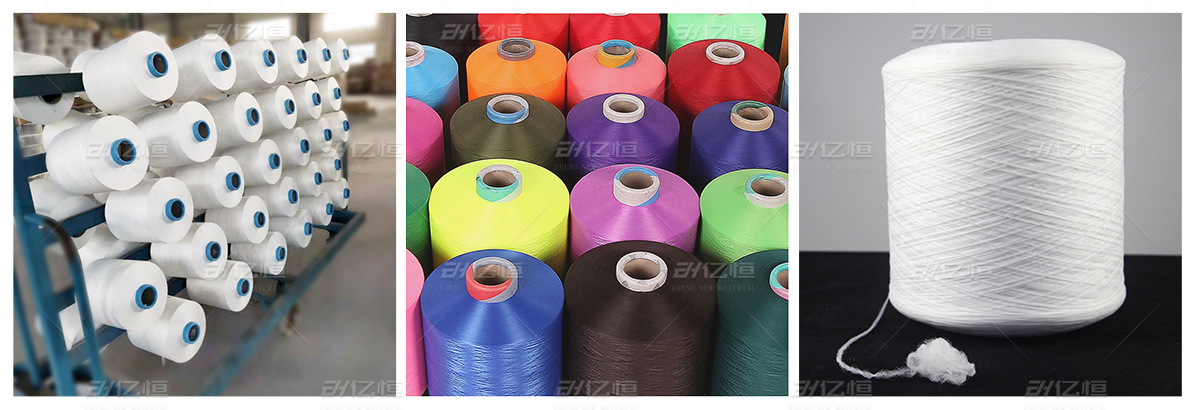
When polyester, nylon, or polypropylene is first extruded from a spinneret, the filaments are smooth, straight, and plastic-like; this is called straight filament (fully drawn yarn, FDY). To achieve elasticity, bulk, or warmth, the filament's shape must be modified; hence the textured yarn technology.
Textured yarns fall into two main categories:
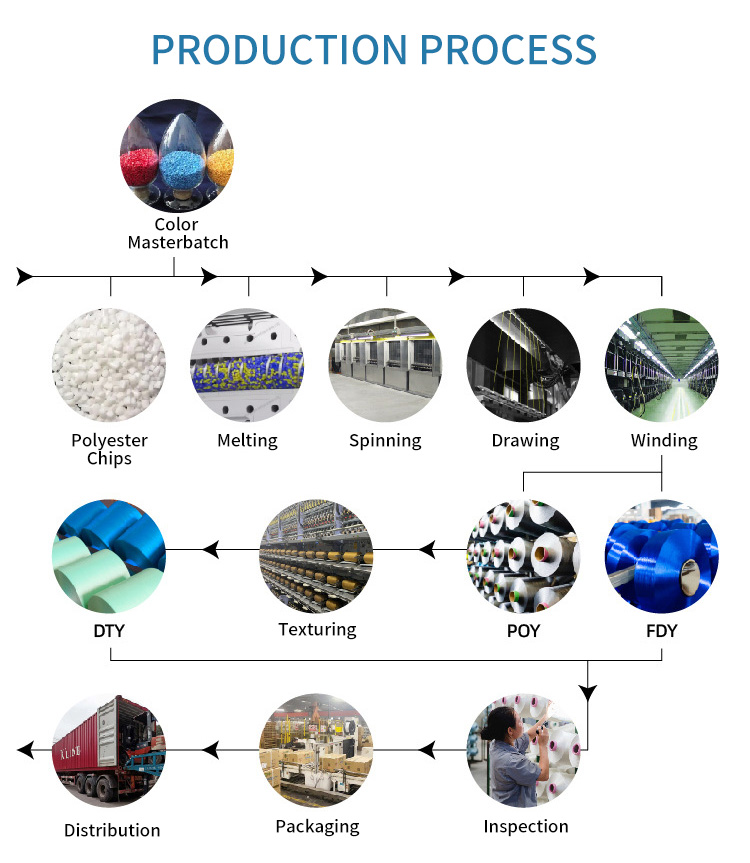
The main raw materials are polyester (PET) and nylon (polyamide). Among them, polyester low-elastic yarn is the most widely used synthetic elastic yarn globally. All three share the core production process of false-twist texturing: the yarn is heated, twisted like a twist of dough, heat-set, and then untwisted, so the fibers retain a spiral crimp and gain spring-like stretch and recovery.
In one sentence:
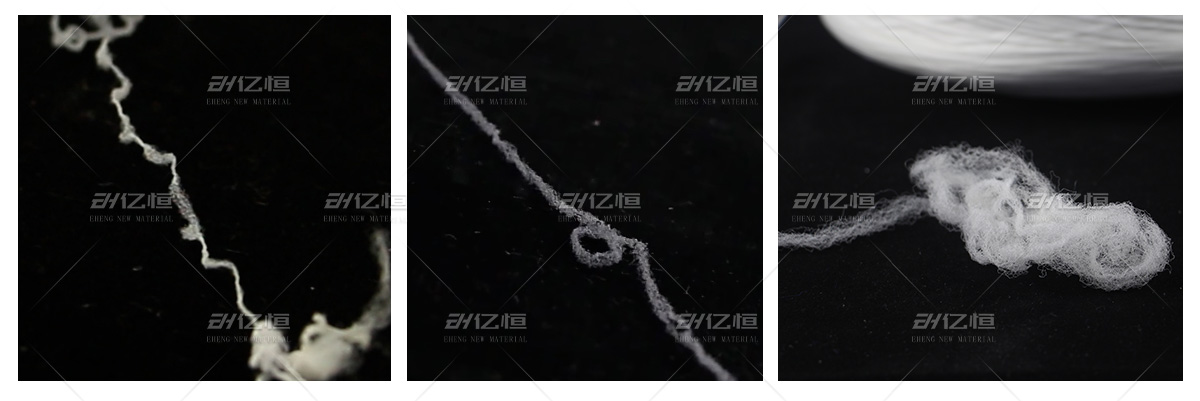
Both high-elastic and low-elastic yarns are classified as DTY (Draw Textured Yarn). Starting from polyester chips, POY (pre-oriented yarn) is first spun, then fed into a texturing machine for drawing, false-twisting, and heat-setting.
How are they distinguished on the same machine?
The key lies in whether the second heater is active. A texturing machine typically has two heaters:
Because high-elastic yarn uses fewer processing steps (no second heater), it is actually cheaper than low-elastic yarn. However, its crimp stability is slightly lower, and long-term stretch recovery may be less consistent.
High-Elastic Yarn
Low-Elastic Yarn
Analogy:
Interlaced yarn is a special member of the elastic yarn family. It is not a third category independent of high/low elastic types, but rather a low-elastic or high-elastic yarn that undergoes an additional air-interlacing process: compressed air is blown onto the yarn, creating periodic entanglement points (interlaced knots) along the filament.
These knots provide unique advantages:
Most classic application: wool-like fabrics. Ordinary polyester filament yields a “plastic-like” feel. Interlaced yarn, with its surface knots, produces fabrics with soft luster, rich hand feel, and good pilling resistance – highly similar to wool.
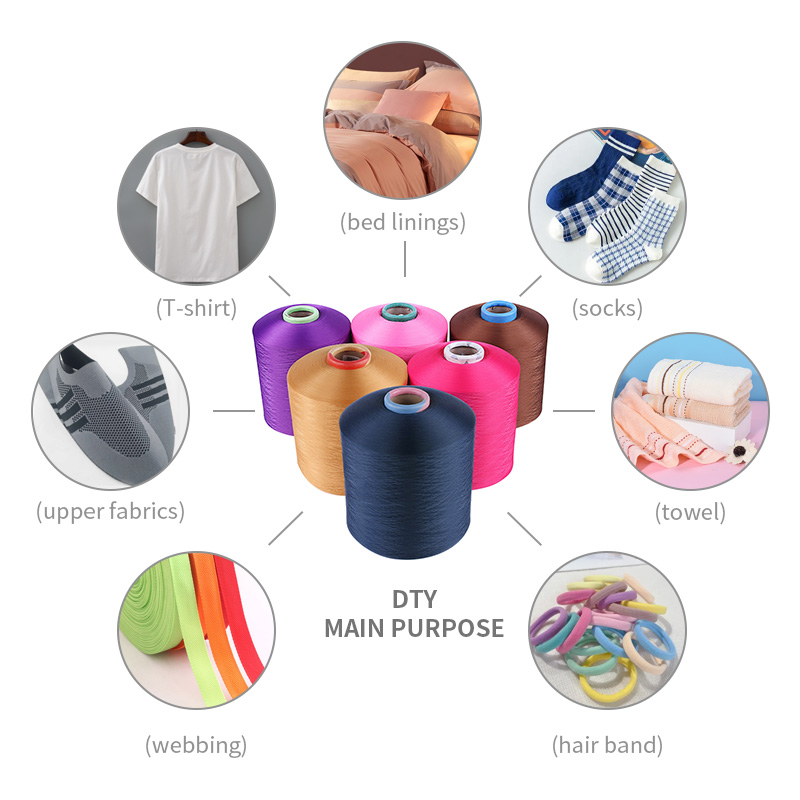
Polyester DTY interlaced yarn is available in 50D – 600D and is widely used in suits, shirts, curtains, quilt covers, and sofa fabrics.
|
Property |
High-Elastic Yarn |
Low-Elastic Yarn |
Interlaced Yarn |
|
Elastic elongation |
>300% |
Usually <50% |
Depends on base type (low-elastic interlaced = similar to low-elastic) |
|
Bulk / hand feel |
Firm, moderate bulk |
Soft, voluminous |
Bulky yet firm, wool-like |
|
Pilling / durability |
High strength, wear-resistant |
Moderate strength, good durability |
Good cohesion, resists pilling |
|
Main material |
Mostly nylon |
Mostly polyester |
Mostly polyester |
|
Typical fabrics |
Stretch denim, swimwear, hosiery, shapewear, sportswear |
Knitted outerwear, T-shirts, casual pants, curtains, upholstery, bedding |
Wool-like overcoats, linen-like fabrics, suits, high-end dresses |
Understanding the technical differences and suitable applications of these three elastic yarns will help you select the right material and develop fabrics that are both aesthetically pleasing and durable.
Nantong EHENG produce Monofilament (PA, PES, PET, PP, PLA), Nylon yarn, Twisted yarn, Covered Yarn, Fancy yarn, Sewing thread, BCF yarn, Low melting yarn.
NO.9 Ximeng Road, Development Zone, Haian, China 226600
Copyright © Nantong Eheng New Material Technology Co., Ltd. All Rights Reserved - Privacy Policy
 EN
EN



 Hot News