Within the broad polyester filament yarn product family, FDY, DTY and ATY stand as the three most widely used mainstream categories across both civil textile and industrial fabric sectors. Many industry practitioners are familiar with their different applications, but few fully understand the core logic behind these differences: Why is FDY the preferred choice for high-gloss plain fabrics? Why are over 90% of stretch knit fabrics made with DTY? And why do outdoor workwear and cotton/linen-like fabrics favor ATY?
The fundamental differences among the three stem from their distinct production processes, which directly determine the internal structure, hand feel, elasticity, fabric appearance and ultimate application scenarios of the yarns. This article systematically breaks down the core distinctions from four dimensions: production principle, key properties, advantages & disadvantages, and typical end uses.
Core Production Process
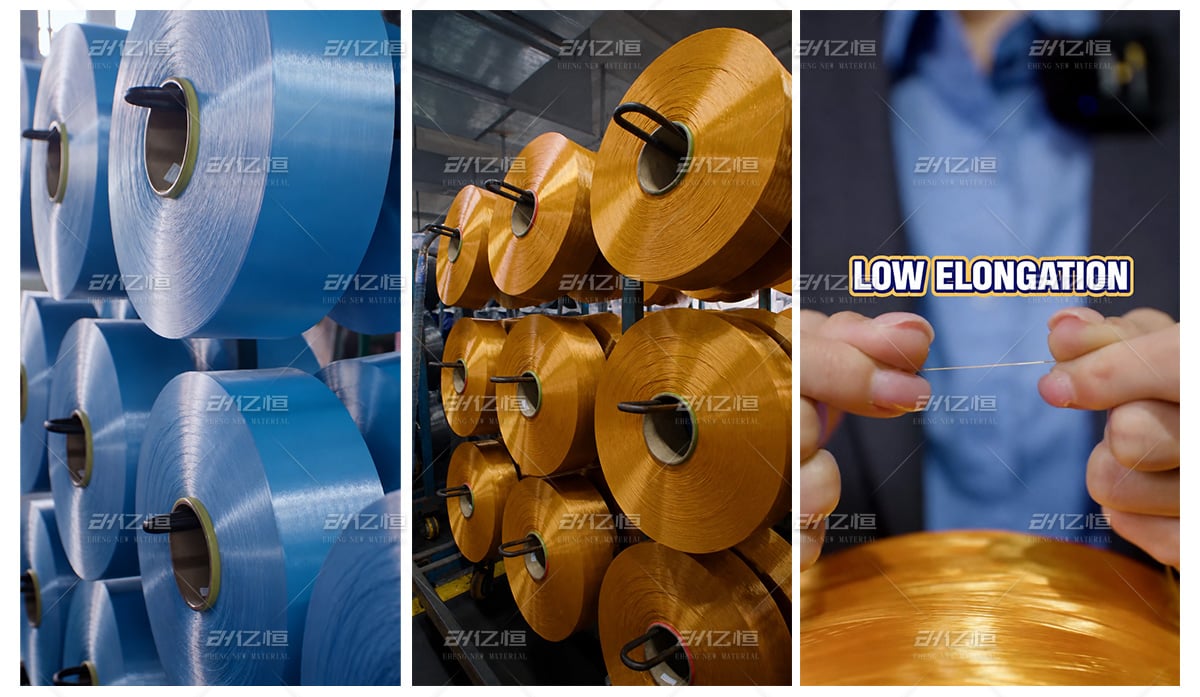
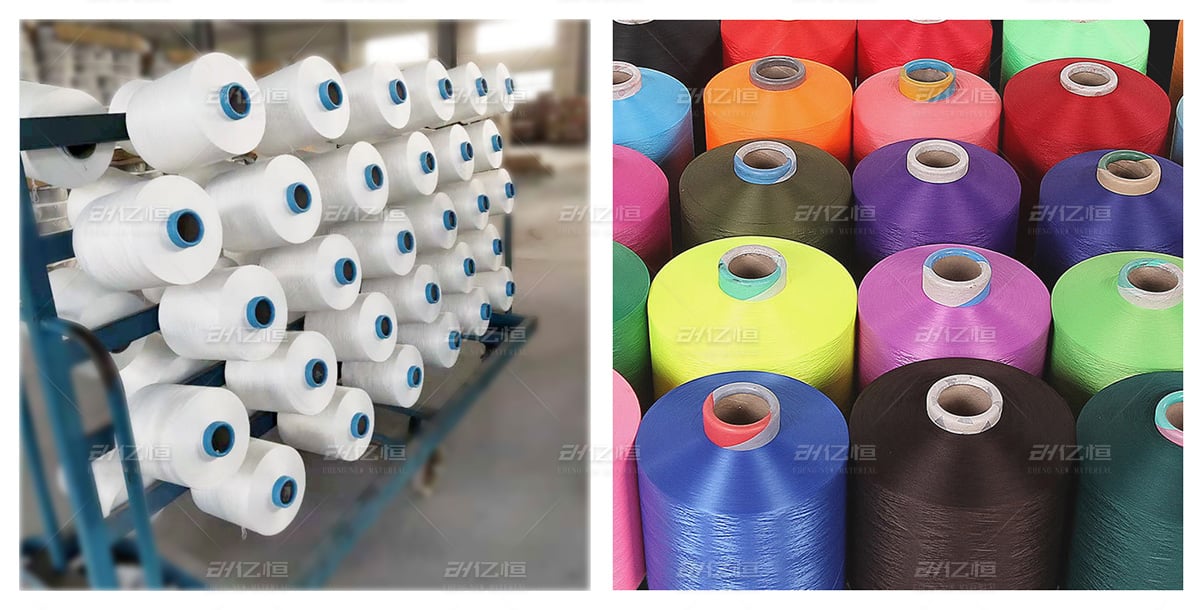
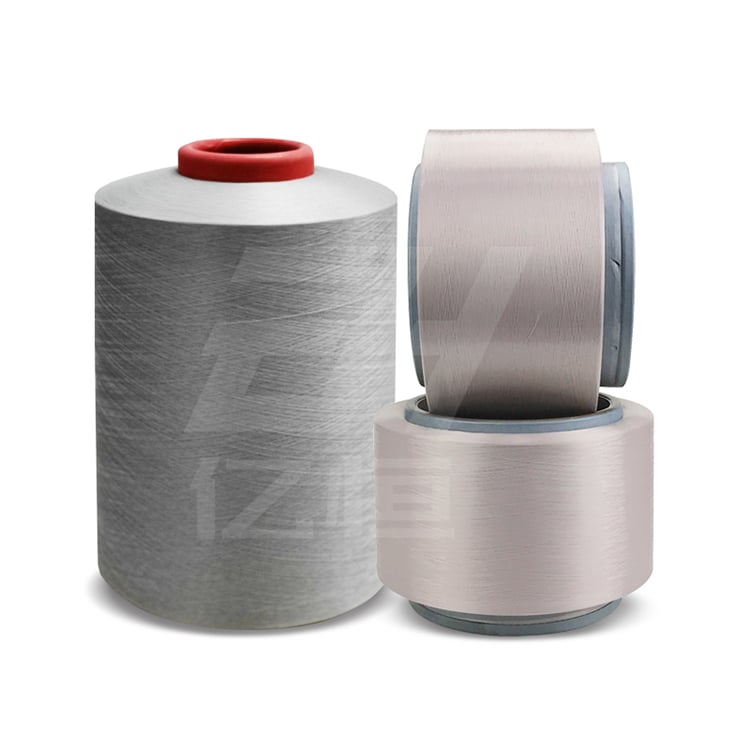
FDY (Fully Drawn Yarn) is produced via a one-step melt spinning process with integrated drawing and heat setting. After polyester chips are melted and extruded, the filaments go through cooling, drawing, heat setting and winding in a single pass on high-speed spinning equipment, with no secondary texturing or deformation process required. It is the most straightforward filament yarn in terms of finished form.
In short: spinning equals finishing, with the fiber structure fully set in one step. It features extremely high molecular orientation and crystallinity, and the internal structure of the yarn is compact and stable, leaving almost no room for subsequent deformation.
Key Fiber Properties
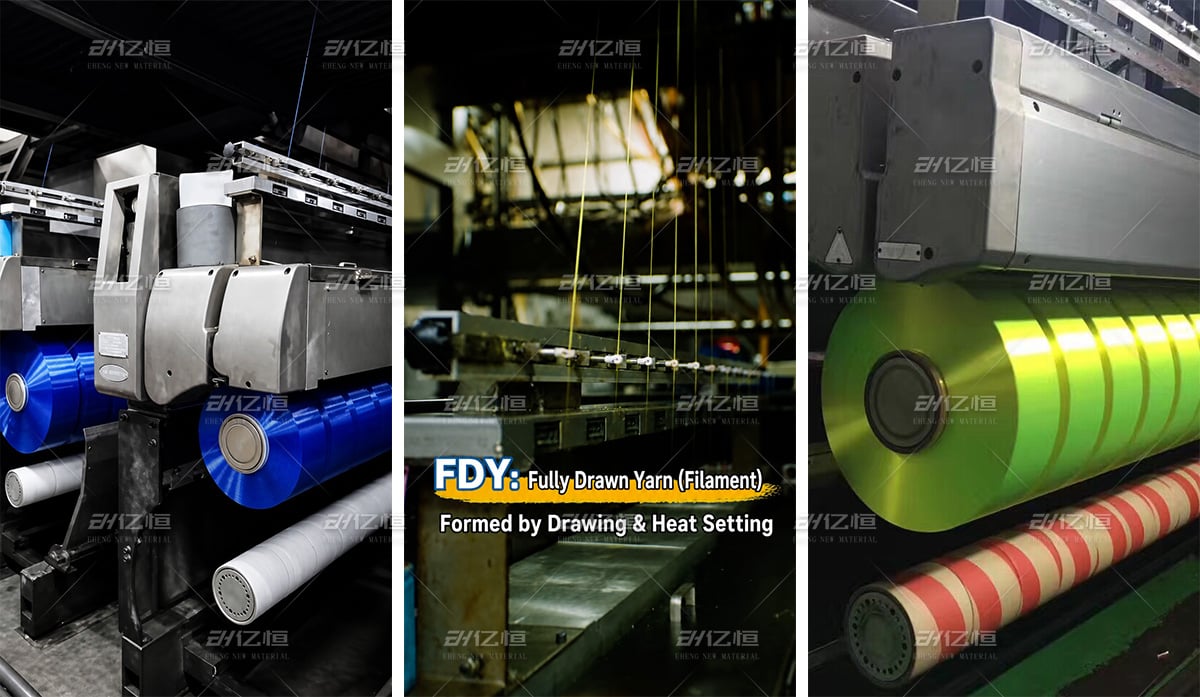
1.Ultra-smooth and straight filament surface: no crimp, no bulk, with parallel and uniform monofilaments, delivering a bright and lustrous fabric appearance;
2.Excellent dimensional stability: low boiling water shrinkage, even linear density and tension, and the fabric is resistant to deformation and shrinkage after weaving;
3.Outstanding tenacity and toughness: good abrasion resistance, high tensile strength, and stable physical properties;
4.Rigid structure with no elasticity: the yarn is relatively stiff, with almost no elastic recovery and low bulk.
Advantages & Disadvantages
✅ Advantages: Smooth and clean fabric surface, uniform luster, excellent dimensional stability, good dyeing uniformity, no barre risk, excellent abrasion resistance, and long service life.
❌ Limitations: Relatively stiff hand feel, lack of elasticity, insufficient bulk, average wearing comfort, and unsuitability for high-stretch fabrics.
Typical End-Use Applications
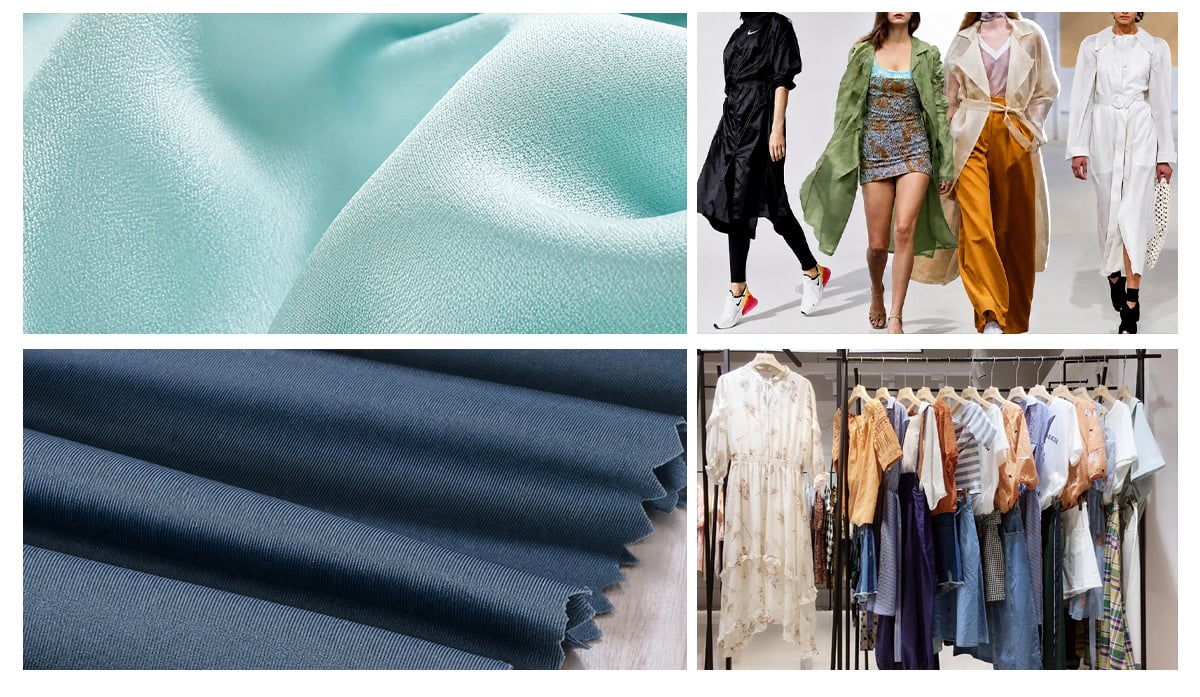
Mainly for woven fabrics that require smoothness, luster, stiffness and deformation resistance, rarely used in circular knitting scenarios:
· Apparel fabrics: high-end yarn-dyed shirt fabrics, suiting linings and fabrics, formal dress linings;
· Home textiles: blackout curtains, bedding products, high-end decorative fabrics;
·Industrial applications: automotive seat belts, industrial conveyor belts, tire cord fabrics, high-strength ropes.
Core Production Process
DTY (Draw Textured Yarn) is the largest-volume and most widely applied filament yarn in the industry, produced via a two-step process: Step 1: Semi-finished POY (Partially Oriented Yarn) is produced by spinning. The fibers are not fully set and retain residual drawability. Step 2: The POY is processed on a texturing machine through heating, drawing, false-twist texturing and heat setting, transforming straight filaments into a uniform, dense spiral crimp structure, and finally set as low-elastic yarn.
In short: spinning first, then texturing. Elasticity and bulk are imparted to the fibers through mechanical thermal deformation.
Key Fiber Properties
1.Built-in mild stretch and high bulk: the spiral crimp structure gives the fiber good recovery, resulting in soft, non-rigid fabrics;
2.Soft and skin-friendly hand feel: makes up for the stiff hand feel of FDY, delivering excellent comfort for close-fitting wear;
3.Strong weaving adaptability: uniform evenness, low breakage rate, compatible with various circular knitting machines and high-speed looms;
4.Balanced comprehensive performance: well-balanced elasticity, tenacity and shrinkage, offering the highest overall cost performance.
Advantages & Disadvantages
✅ Advantages: Soft and bulky, mildly stretchy and comfortable, outstanding cost performance, good dyeability, and suitability for most civil fabric scenarios.
❌ Limitations: Slight elasticity decay after high-temperature setting, and inferior adaptability to high-tenacity industrial scenarios compared with FDY.
Typical End-Use Applications
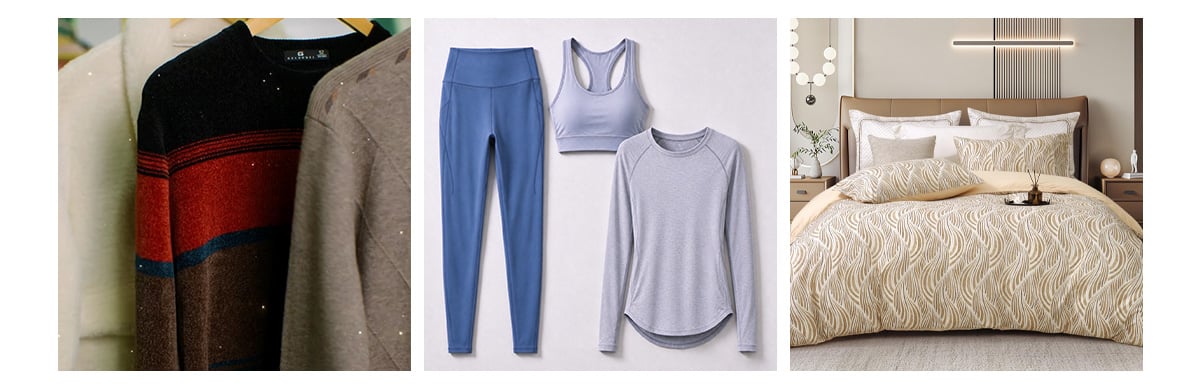
The absolute core raw material for knit fabrics, and also the key base material for yoga fabrics and sports functional fabrics, covering over 80% of civil apparel scenarios:
· Knit fabrics: all kinds of single/double jersey circular knit fabrics, yoga fabrics, fitness wear fabrics, quick-dry sportswear fabrics;
· Casual fabrics: fleece, suede, peach-skin fabrics, thermal knit fabrics;
· Other categories: general home textiles, fashion fabrics, stretch fabrics for footwear and headwear.
Currently, the nylon 66 and polyester stretch brushed fabrics used in high-end yoga pants all use DTY as the core raw material. Meanwhile, DTY is also the yarn type most associated with barre and chromatic aberration issues in weaving and dyeing processes.
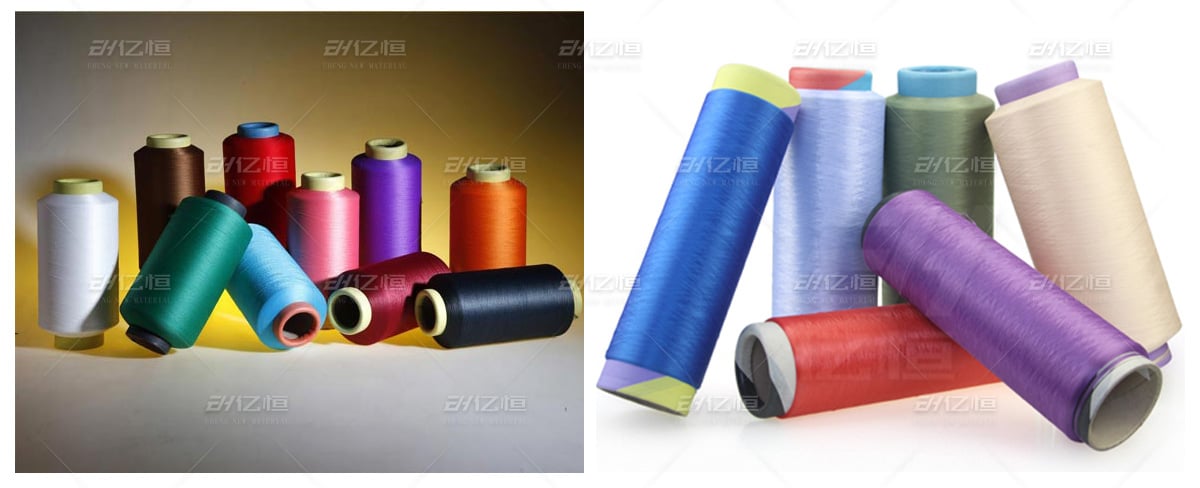
Core Production Process
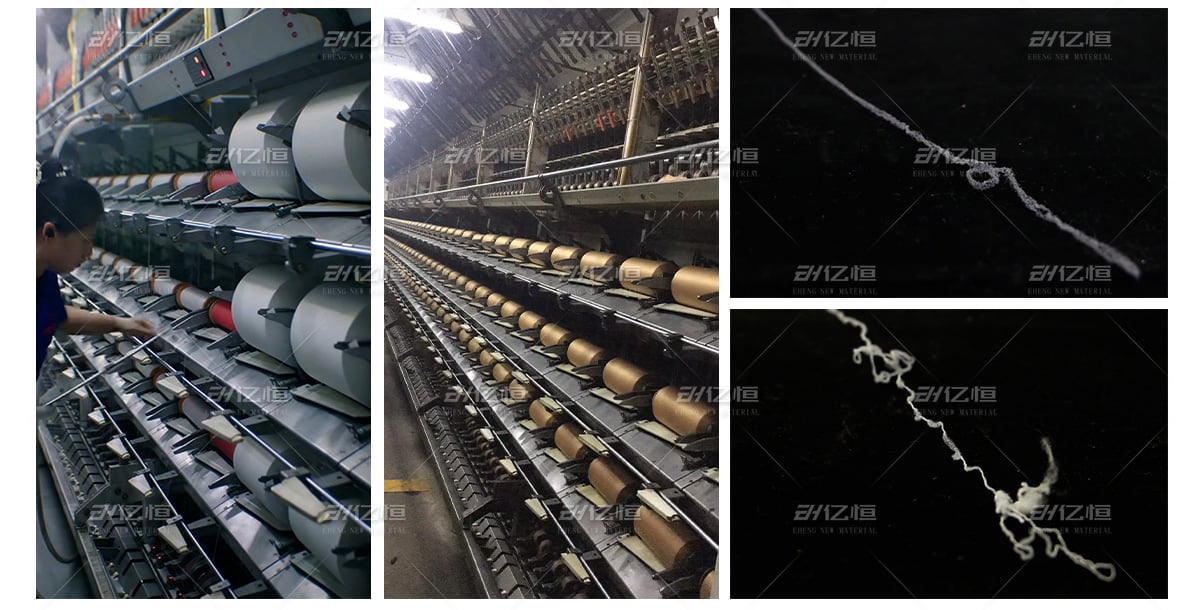
ATY (Air Textured Yarn), also known as Taslan yarn in the industry, features a production process fundamentally different from FDY and DTY. Using FDY or POY as base yarn, it is processed by high-pressure, high-speed air jetting, which disrupts, tangles, loops and bulks the parallel monofilaments, eventually forming an irregular looped, staple-like structure. The entire process involves no false twist and no high-temperature crimp setting.
In short: instead of mechanical twist, air flow disrupts the yarn bundle to simulate the texture and appearance of natural short fibers such as cotton and linen.
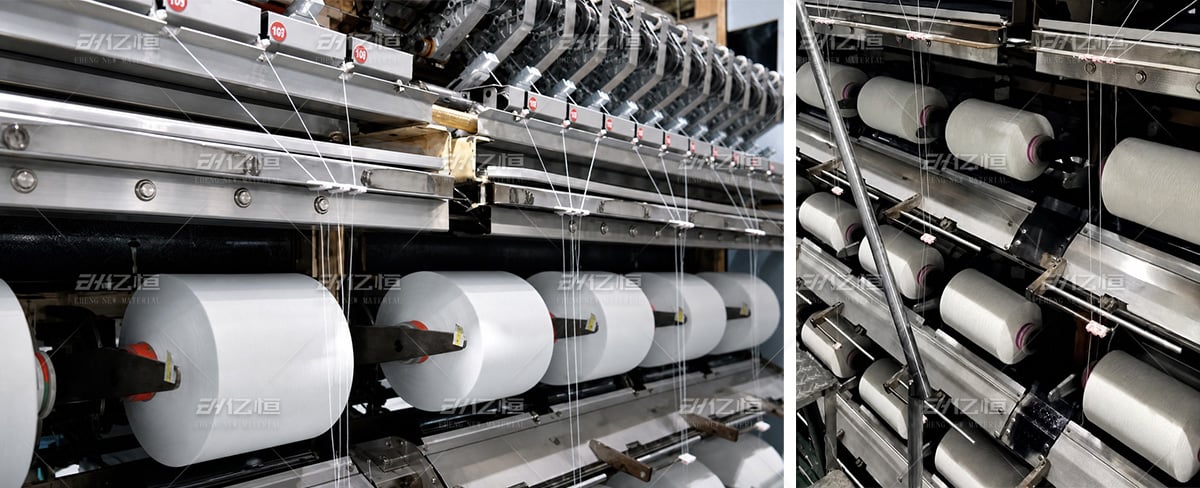
Key Fiber Properties
1.Highly staple-like texture: fine loops on the yarn surface create a matte, non-lustrous appearance, completely eliminating the shiny look of synthetic fabrics;
2.Excellent bulkiness: loose yarn structure delivers outstanding fabric breathability and drapability;
3.Natural fabric texture: the irregular yarn structure endows the fabric with natural grain and premium texture;
4.Non-elastic with good pilling resistance: stable tangled fiber structure, more wash-resistant and durable than ordinary DTY, with better pilling resistance.
Advantages & Disadvantages
✅ Advantages: Premium matte finish, authentic cotton/linen-like style, breathable and dry feel, good pilling resistance, and three-dimensional textured fabric surface.
❌ Limitations: No elasticity, lower breaking tenacity than FDY, prone to fly during weaving, and unsuitability for close-fitting stretch fabrics.
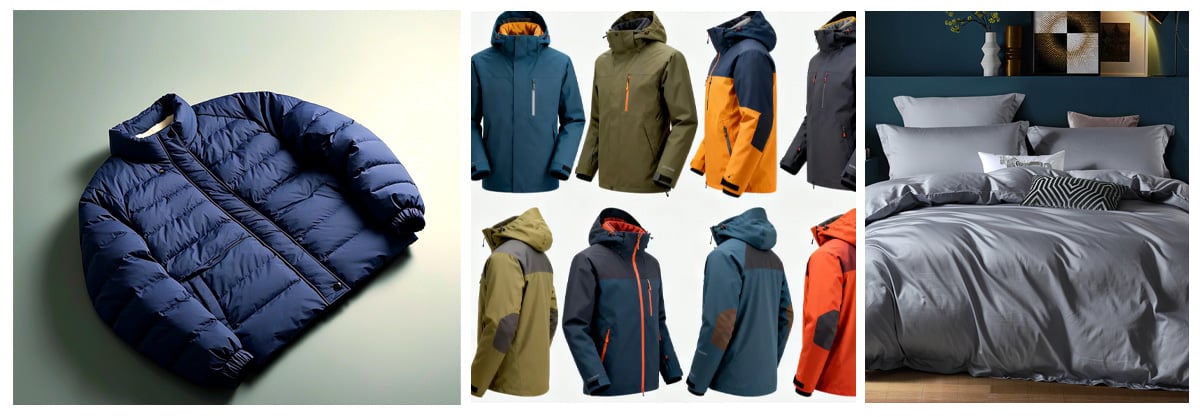
Typical End-Use Applications
Mainly for matte, textured, workwear and outdoor style fabrics, focusing on differentiated texture:
· Outdoor apparel: shell jackets, workwear jackets, quick-dry coat fabrics;
· Fashion fabrics: high-end cotton-like and linen-like fashion fabrics, trouser fabrics;
· Industrial fabrics: luggage fabrics, tent fabrics, outdoor functional fabrics;
· Home textiles & decoration: light luxury matte home textiles, textured decorative fabrics.
Summary of Core Differences
FDY is the "rigid champion" pursuing stability and smoothness; DTY is the "versatile champion" balancing elasticity and cost performance; ATY is the "style champion" focusing on texture and differentiation.
There is no absolute superiority or inferiority among the three types of filament yarns. They only differ in scenario adaptability. The core of selection lies in matching the performance requirements and style positioning of the end product.
Nantong EHENG produce Monofilament (PA, PES, PET, PP, PLA), Nylon yarn, Twisted yarn, Covered Yarn, Fancy yarn, Sewing thread, BCF yarn, Low melting yarn.
NO.9 Ximeng Road, Development Zone, Haian, China 226600
Copyright © Nantong Eheng New Material Technology Co., Ltd. All Rights Reserved - Privacy Policy
 EN
EN

 Hot News